


Why Choose Us
One-stop service
We promise to provide you with the fastest reply, the best price, the best quality, and the most complete after-sales service.
Quality Assurance
We have a rigorous quality assurance process in place to ensure that all our services meet the highest standards of quality. Our team of quality analysts checks each project thoroughly before it is delivered to the client.
State-of-the-art Technology
We use the latest technology and tools to deliver high quality services. Our team is well-versed in the latest trends and advancements in technology and uses them to provide the best results.
Competitive Pricing
We offer competitive pricing for our services without compromising on quality. Our prices are transparent, and we do not believe in hidden charges or fees.
Customer Satisfaction
We are committed to delivering high quality services that exceed our clients' expectations. We strive to ensure that our clients are satisfied with our services and work closely with them to ensure their needs are met.
Customer Service
We earn your respect by delivering on time and on budget. We built our reputation on exceptional customer service. Discover the difference it makes.
This innovative technology is designed to produce clean and sustainable hydrogen fuel for various applications. Our industrial hydrogen generator utilizes cutting-edge technology to produce hydrogen from water, making it a zero-emission power source.

Our commercial hydrogen generator stands as a beacon of innovation in the realm of sustainable energy solutions. Built upon advanced electrolysis technology, our generators offer a reliable and efficient means of producing high-purity hydrogen gas for a myriad of industrial applications.

Water Electrolyzer For Hydrogen
Our Water Electrolyzer for Hydrogen is a cutting-edge solution designed for efficient and sustainable hydrogen generation. By utilizing advanced electrolysis technology, it harnesses the power of water to produce high-purity hydrogen gas.

Our Green H2 Production system is a cutting-edge solution for generating hydrogen gas sustainably, revolutionizing industries with clean energy alternatives.

Our large scale hydrogen generator is at the forefront of clean energy technology, offering a sustainable solution for industries seeking to reduce their carbon footprint.

Our H2 Water Generator represents a breakthrough in clean energy technology, harnessing the power of water to produce hydrogen gas sustainably.

Our Chemical Hydrogen Generator represents a state-of-the-art solution for producing hydrogen gas through chemical reactions. By leveraging innovative chemical processes, we offer a reliable and environmentally friendly method for generating high-purity hydrogen gas, catering to diverse industrial and commercial needs.

Molecular Hydrogen Water Generator
Our Molecular Hydrogen Water Generator is a state-of-the-art device designed to infuse water with molecular hydrogen, unlocking its potential health benefits.

Introducing our state-of-the-art Large-Scale HHO Generator, a cutting-edge solution for efficient hydrogen gas production through advanced electrolysis technology.

Our Building HHO Generator is a revolutionary solution for sustainable building management, providing clean and efficient hydrogen gas production on-site.

A hydrogen generator is a device that produces hydrogen gas using an electrochemical process. Hydrogen generators are often used in industrial and laboratory settings to provide a reliable source of hydrogen gas for various applications.
There are several types of hydrogen generators, including alkaline electrolysis generators, proton exchange membrane (PEM) generators, and solid oxide electrolysis generators. Each type of generator uses a different process to produce hydrogen gas, but the basic principle is the same: electricity is used to split water molecules into hydrogen and oxygen, with the hydrogen gas being collected and used for various applications.
Hydrogen generators can be powered by a variety of energy sources, including renewable sources such as solar and wind power. This makes hydrogen generators a potentially sustainable source of hydrogen gas, which is a clean-burning fuel that produces only water vapor as a byproduct when it is burned.
Industrial hydrogen generators have a wide range of applications, including:
Fuel cell technology: Hydrogen is a key fuel source for fuel cells, which convert hydrogen into electricity with high efficiency and low emissions.
Industrial processes: Hydrogen gas is used in a variety of industrial processes, including petroleum refining, food processing, and chemical production.
Laboratory research: Hydrogen gas is used in many laboratory settings for experiments and analysis.
Transportation: Hydrogen fuel cell vehicles use hydrogen gas as a fuel source, with the hydrogen gas being converted into electricity to power an electric motor.
While commercial hydrogen generators have the potential to provide a reliable and sustainable source of hydrogen gas, they also require careful maintenance and operation to ensure safe and efficient performance. It is important to carefully evaluate the costs and benefits of using a hydrogen generator and ensure that proper safety measures are in place to minimize the risk of accidents or other hazards.

The Benefits of Using a Hydrogen Generator
Using a Hydrogen Generator can reduce your carbon footprint and contribute to a cleaner environment. Hydrogen fuel is a clean and sustainable alternative to traditional fossil fuels, and our generator produces it efficiently and cost-effectively. Additionally, our generator is highly efficient and requires minimal maintenance.
Hydrogen fuel is a clean and sustainable alternative to traditional fossil fuels. It does not produce harmful pollutants or greenhouse gases when used, making it an excellent choice for those looking to reduce their environmental impact. Also, hydrogen fuel is a non-toxic and non-corrosive gas, making it a safe and reliable fuel source.
The Hydrogen Generator produced by Modern Thermal Design is also highly efficient and requires minimal maintenance. This means that it can be used for long periods without needing repairs or replacements. This makes it an excellent choice for those looking for a long-term, sustainable power source.
Another benefit of using a Hydrogen Generator is its cost-effectiveness. Unlike traditional fossil fuels, hydrogen fuel can be produced on demand, so you do not have to pay for expensive imports or transportation. Additionally, the cost of producing hydrogen fuel decreases as technology improves, making it an increasingly affordable option.
What is the potential for 'green' hydrogen from methanol
There are many reasons why methanol is perhaps nature's perfect energy carrier: it is a non-corrosive liquid that is easily and economically transported globally; it is naturally biodegradable; and methanol is commercially manufactured from a wide range of starting materials. The latter leads directly to methanol potentially being a very 'green' precursor to hydrogen. So-called 'renewable methanol' is synthesised following two general, but different, chemical routes: one is biogenic in nature and the other is based on reacting hydrogen with carbon dioxide.
It is significant that methanol is readily synthesised from a gas stream comprised of hydrogen and carbon dioxide, with or without carbon monoxide (generically termed syngas). This is basic chemical engineering that has been the foundation of the global petrochemical industry for about 100 years. Syngas is readily derived from carbon-containing materials following reaction with water or oxygen (from air).
Renewable methanol made following the biogenic pathway will use syngas made from biomass, animal and human waste, and even garbage buried in landfills. Without human intervention, these waste materials will slowly and naturally decompose and release large quantities of carbon dioxide and methane – both greenhouse gases – into the environment. Indeed, methane has a global warming potential many times greater than carbon dioxide. By avoiding these harmful emissions, and converting the renewable feedstock into green methanol, the result is methanol with a low (even negative) carbon intensity.
To realise renewable methanol by combining hydrogen with carbon dioxide, it is imperative that the hydrogen is synthesised using renewable electricity such as wind or solar radiation. When made by this pathway, the renewable methanol is called e-methanol. Because of the favourable economics of transporting methanol over great distance versus hydrogen, e-methanol is viewed as a practical method of capturing remotely-generated green electricity, storing that energy, and then shipping it often hundreds to thousands of kilometres to the point of use.
The Methanol Institute is tracking more than 80 renewable methanol projects around the globe that are projected to produce more than eight million metric tons, or ten billion litres, of e-methanol and biogenic methanol by 2027.
Whether biogenic renewable methanol or e-methanol is the feedstock to make hydrogen, the resulting carbon intensity of the product hydrogen compares favourably with both the European sustainable hydrogen directive (less than 3kg CO2e/kg hydrogen) and the United States clean hydrogen mandate (less than 2kg CO2e/kg hydrogen) as shown in Fig. 1. The strongly negative carbon intensity associated with renewable methanol synthesised from animal manure and sewage solid waste is due to avoided methane emissions. It is worth noting that achieving negative carbon intensity will contribute to offsetting the carbon footprint of certain sectors that are more difficult to decarbonise, such as aviation.
Hydrogen Gas Generators for a Variety of Applications
Hydrogen cooling generators and hydrogen generation systems are commonly utilized for a wide range of applications throughout many industries. The following list of applications represent some of the more common uses for hydrogen generators.
Industrial
As your business grows, increasing amounts of hydrogen are needed to satisfy production demands. This can cause issues ranging from permit restrictions and space limitations to increased costs and safety concerns. On-site space-saving hydrogen generators are easy to permit, install, and operate. With minimal maintenance requirements, our comprehensive hydrogen generator solutions enable customers to maximize budget flexibility and optimize operational efficiency.
Power Plants
Hydrogen is an effective cooling agent in electric generators. However, power plants must maintain optimal gas purity and pressure inside the generator casings to ensure generation efficiency, operational safety, and equipment reliability. With fully-automated performance, on-site complete solutions utilize PEM technology to generate hydrogen that will maximize generator capacity, extend generator life, and reduce overall operational costs.
Semiconductor
Because high purity carrier gas is crucial to supporting semiconductor processes, professionals require a high-quality yet cost-effective gas supply. By eliminating external impurities, on-site hydrogen generators safely produce gas with consistent purity and guaranteed composition on-site, maintaining high performance in and extending the lifespan of palladium purifiers. Featuring a true zero-inventory design, these generators eliminate the need for stored flammable, giving your facility extra flexibility in relation to permitting restrictions.
Meteorology
Thanks to its low cost and reliable availability, hydrogen has been widely adopted as a lift gas to replace helium in meteorology processes. Requiring only electricity and water, on-site hydrogen generators safely and efficiently produce hydrogen at its point of use. Well-suited for diverse weather locations where consistent gas sources are unavailable, these devices eliminate the need to store high-pressure flammable gas on-site. Compared to alternative supply methods, on-site PEM systems require minimal maintenance for the highest on-stream time.
Heat Treating
Hydrogen is commonly used to provide a reductive atmosphere in material processing applications. Compared to delivered gas, dissociated ammonia, and exo- or endo gas, PEM hydrogen generation systems produce ultrahigh purity gas and offer a drier, safer alternative for operational support. When paired with generated nitrogen, on-site comprehensive solutions eliminate the need for delivery and storage of hazardous gases.
Hydrogenation
Widely employed in the petroleum, food, pharmaceutical, and chemical industries, hydrogenation processes require turnkey gas solutions that provide a safe, clean, and reliable high-volume hydrogen supply. On-site gas generation systems are expandable through their modular designs and can provide almost unlimited quantities to address growing production needs. Unlike traditional SMR, PEM systems are 100% emission free when integrated with renewable energy, supporting sustainability and green initiatives.
The principle of hydrogen generator
A hydrogen generator is a device used to generate hydrogen gas (H2), and its working principle is based on the reaction of electrolytic water. The following is the working principle and function of the hydrogen generator:
Working principle
The working principle of a hydrogen generator mainly involves water electrolysis reaction. Usually, water (H2O) is composed of hydrogen (H2) and oxygen (O2), while the process of electrolysis of water decomposes it into hydrogen and oxygen. The specific reaction equation is as follows:
2H2O (liquid) ->2H2 (gas)+O2 (gas)
In a hydrogen generator, an electrolytic cell is generally used, which includes two electrodes: an anode and a cathode. These two electrodes are immersed in an electrolyte solution, usually an alkaline (such as sodium hydroxide) or acidic (such as sulfuric acid) solution.
When an external power source (usually a DC power source) is connected to the electrodes of the electrolytic cell, the following two reactions occur:
On the cathode, water molecules (H2O) receive electrons and are reduced to hydrogen gas (H2)
2H2O (liquid)+2 electrons ->H2 (gas)+2 hydroxide ions (2OH -)
On the anode, water molecules lose electrons and oxygen (O2) is released
2H2O (liquid) ->O2 (gas)+4 hydrogen ions (4H+)+4 electrons
These reactions decompose water into hydrogen and oxygen, which are discharged from the gas outlet in the electrolysis cell, while oxygen is discharged from the gas outlet in the electrolysis cell.
Function
The main function of a hydrogen generator is to generate high-purity hydrogen gas. It has a wide range of applications in various laboratories and industrial applications, including but not limited to:
Laboratory applications: Used for chemical experiments in the laboratory, sample preparation, and as a reducing agent in the reaction chamber.
Industrial applications: Used in industrial processes such as metal welding, semiconductor manufacturing, chemical production, etc. Hydrogen is also used as fuel for fuel cells and hydrogen vehicles.
Energy storage: Hydrogen is considered one of the storage forms of renewable energy, and hydrogen generators are used to convert electrical energy into hydrogen to generate electricity when needed.
Laboratory and research: In the laboratory and research field, hydrogen can be used to study the chemical properties of hydrogen, hydrogen energy technology, and related fields of research.
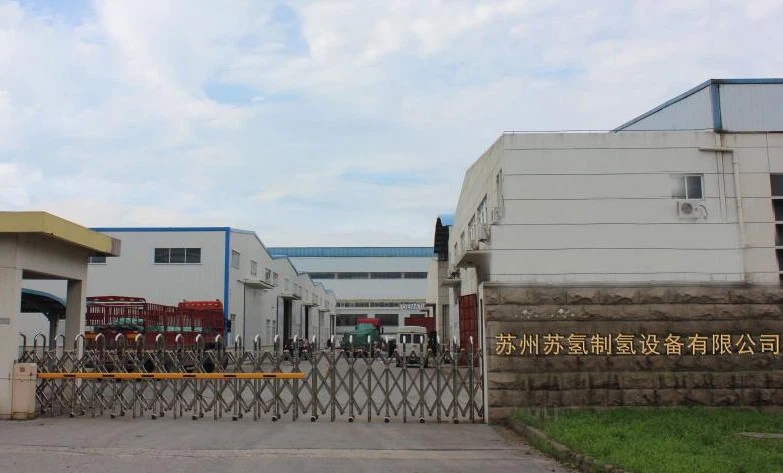
Our Factory
Products are sold in all regions of China and exported to countries around the world. They have been sold in more than 20 countries and regions including the United States, Germany, Morocco, Kenya, Saudi Arabia, Vietnam, Algeria, India, Tanzania, and Taiwan. Successfully provided well -known enterprises such as China Aerospace, PetroChina, China Nuclear Group, BYD, Jiuli Specialty, Tony Electronics, Zheng Energy Group and other well -known enterprises. There are many green hydrogen hydrogen hydrogenation stations such as Wulanchabu, Haikou, Hainan, Hainan Haikou, Yunnan Kunming, etc. provide green and hydrogen -making projects.
FAQ
Q: What is the lifespan of a hydrogen generator?
Q: Can hydrogen generators be used in residential settings?
Q: Are there any government incentives for installing a hydrogen generator?
Q: How does a hydrogen generator impact the environment?
Q: What are the future prospects for hydrogen energy?
Q: Are hydrogen generators efficient?
With three product models scaling from 4kg of hydrogen per day up to 390kg of hydrogen a day, an Element 1 hydrogen generator operates using a highly efficient thermochemical process and achieves energy efficiency of up to 84%, resulting in low hydrogen cost at the point of use.
Q: What can you do with a hydrogen generator?
Q: What are the benefits of HHO gas?
Q: Does HHO really improve fuel economy?
Q: Why hydrogen engines are a good idea?
Q: Can you power a house with a hydrogen generator?
Q: Can you use tap water in hydrogen generator?
Q: What are the problems with hydrogen generation?
Q: Why hydrogen is not used as a fuel?
Q: Is hydrogen better than electricity?
Q: What are 3 benefits of hydrogen energy?
Q: Are hydrogen generators safe?
Q: What does a hydrogen generator do to water?
Q: Are hydrogen generators any good?
Q: Can you use tap water in hydrogen generator?
Hot Tags: commercial hydrogen generator, China commercial hydrogen generator manufacturers, suppliers, factory, Green Hydrogen Electrolysis Process, Containerized Hydrogen Production Equipment, Alkaline Hydrogen Electrolyzer, Hydrogen Purification System, Hydrogen Generator System, Water Electrolyzer for Hydrogen